Tom Lawton
Everything I have made began with something that didn't exist.
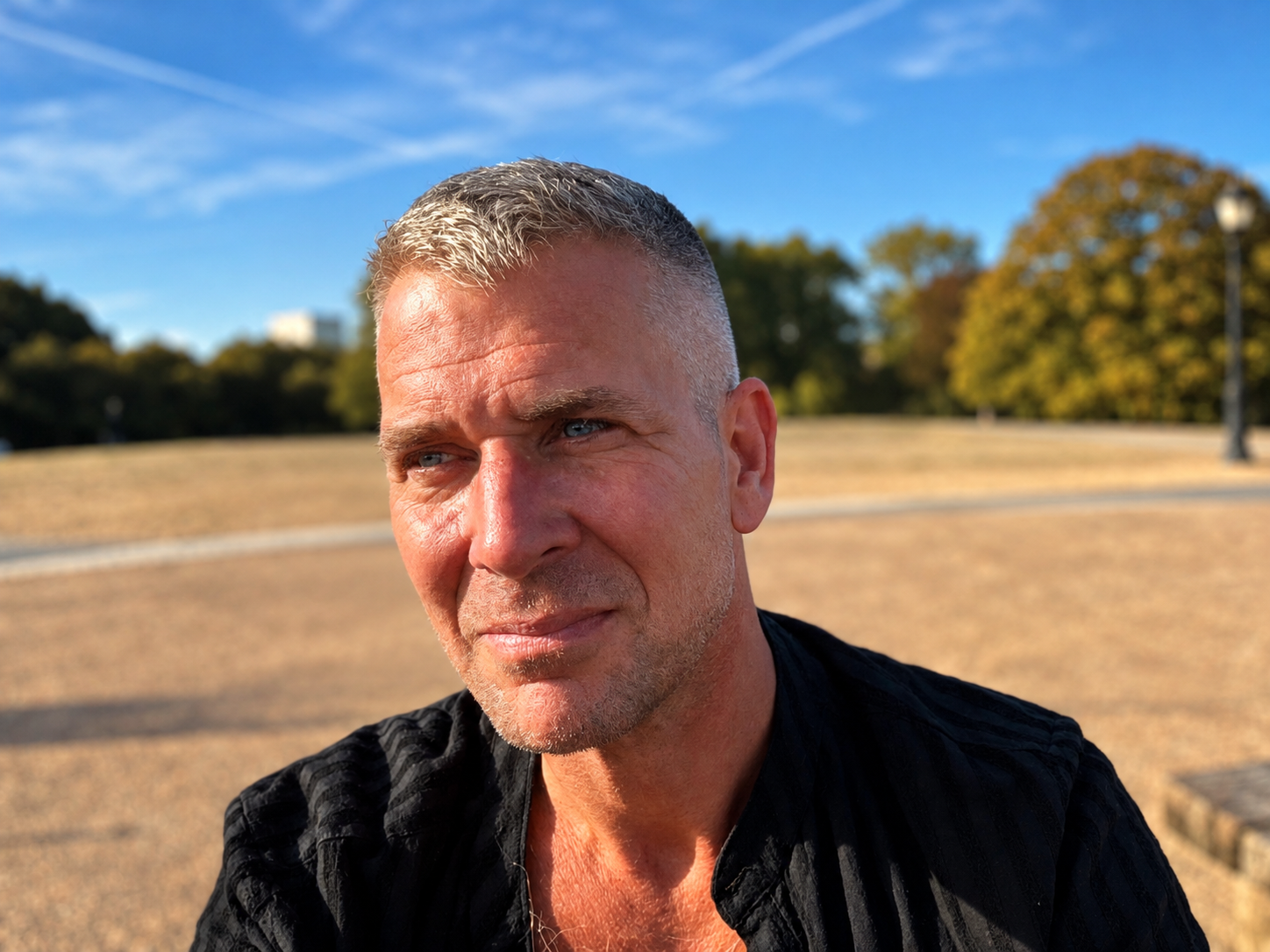
My name is Tom Lawton. I’m an artist, inventor and author.
For more than twenty-five years I have been following my imagination to see where it leads.
It has not been a particularly straight path.
I have invented things, patented things, manufactured things and sold things. I have made kinetic sculptures, experimented with renewable energy, developed early immersive photography technology and explored ways of regenerating degraded soil. I have won awards, appeared on television, spoken on stages, raised money, lost money, succeeded, failed, fallen over and begun again.
Eventually, I wrote a book about it.
But when I look back across all of those apparently different adventures, I can see that I have really been exploring the same few questions all along.
Can the things we make change the way we see the world?
And can wonder itself be useful?
One story. Three ways to experience it: read the book,
encounter the artwork, or hear from the inventor himself.
Tom Lawton is also an international speaker, represented by PepTalk, sharing his experiences of invention, imagination and the power of wonder.
I trained in Product Design & Visualisation, which gave me the tools to turn ideas into physical things. But I have never found the boundaries between disciplines particularly interesting.
Science and spirituality.
Nature and technology.
Movement and stillness.
Usefulness and beauty.
I think of myself as a maker, but perhaps more fundamentally I am an explorer.
I make things to find out what happens.
And quite often, what happens surprises me.
Inventing a life
I started out as an inventor.
What fascinated me then — and still fascinates me now — is the peculiar alchemy involved in bringing something into the world that didn't exist before.
An idea begins invisibly.
Perhaps it is a scribble on a piece of paper. A shape in your head. A question. A joke. A frustration. Something you notice that everybody else appears to have walked past.
Then you make something.
Usually it doesn't work.
So you make another one.
And another.
Eventually, if you are persistent and fortunate, the thing in your imagination becomes something another human being can hold in their hands.
I still find that miraculous.
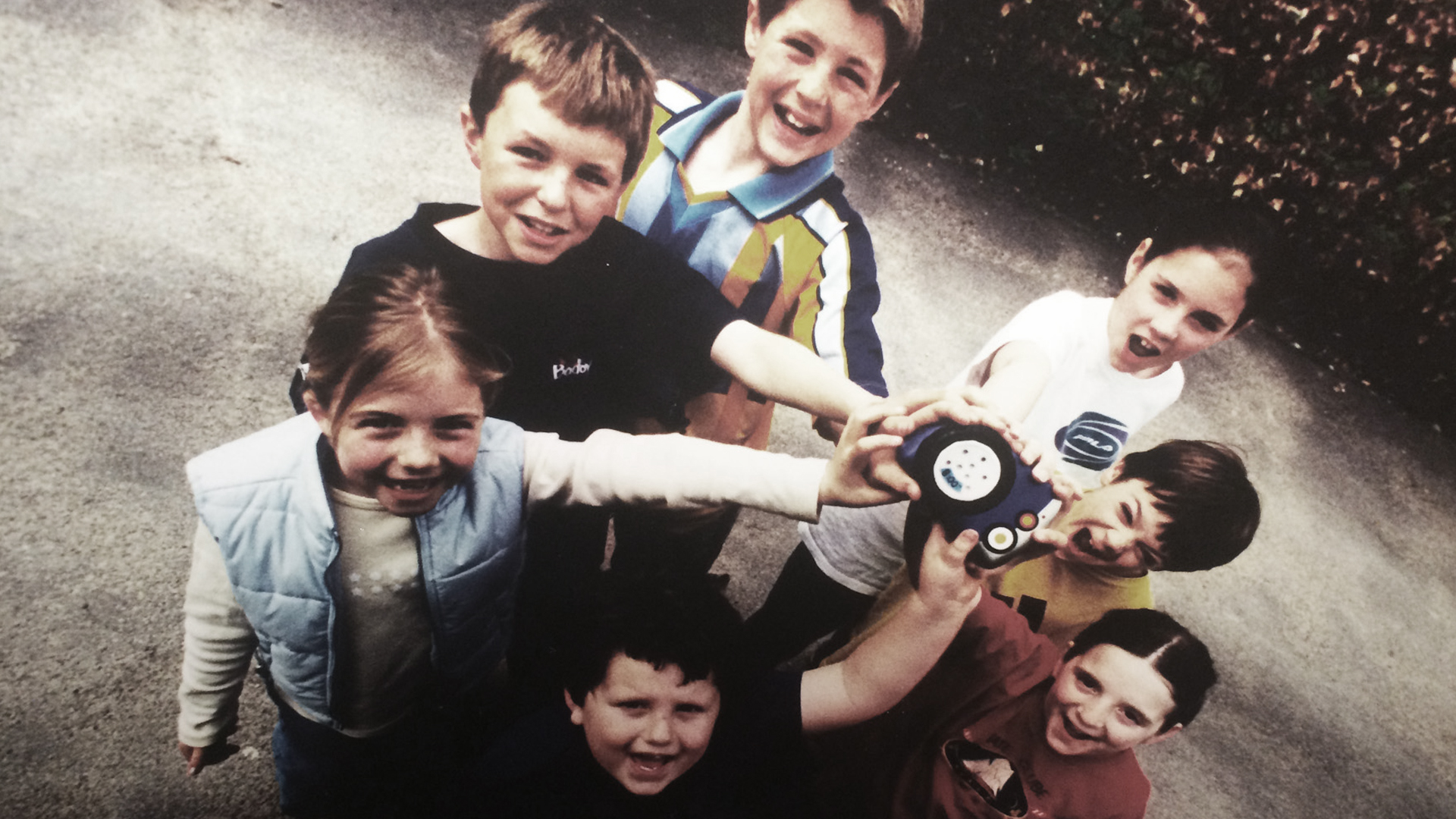
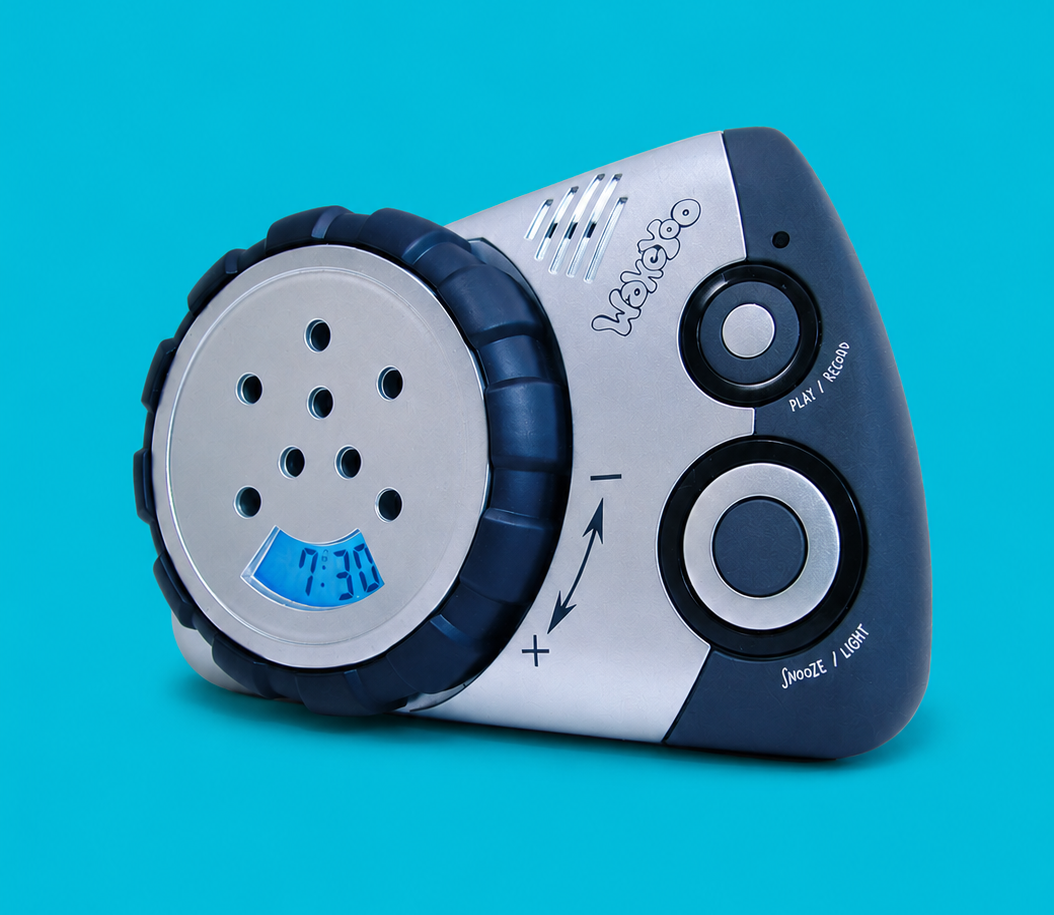
One of my first successful inventions was WakeYoo, a recordable alarm clock that allowed you to wake up to whatever message you wanted. More than 250,000 were sold.
It was useful, but it was also playful. It invited the owner to participate in the object rather than simply consume it.
That idea — that the person encountering something I make might complete it themselves — has stayed with me.
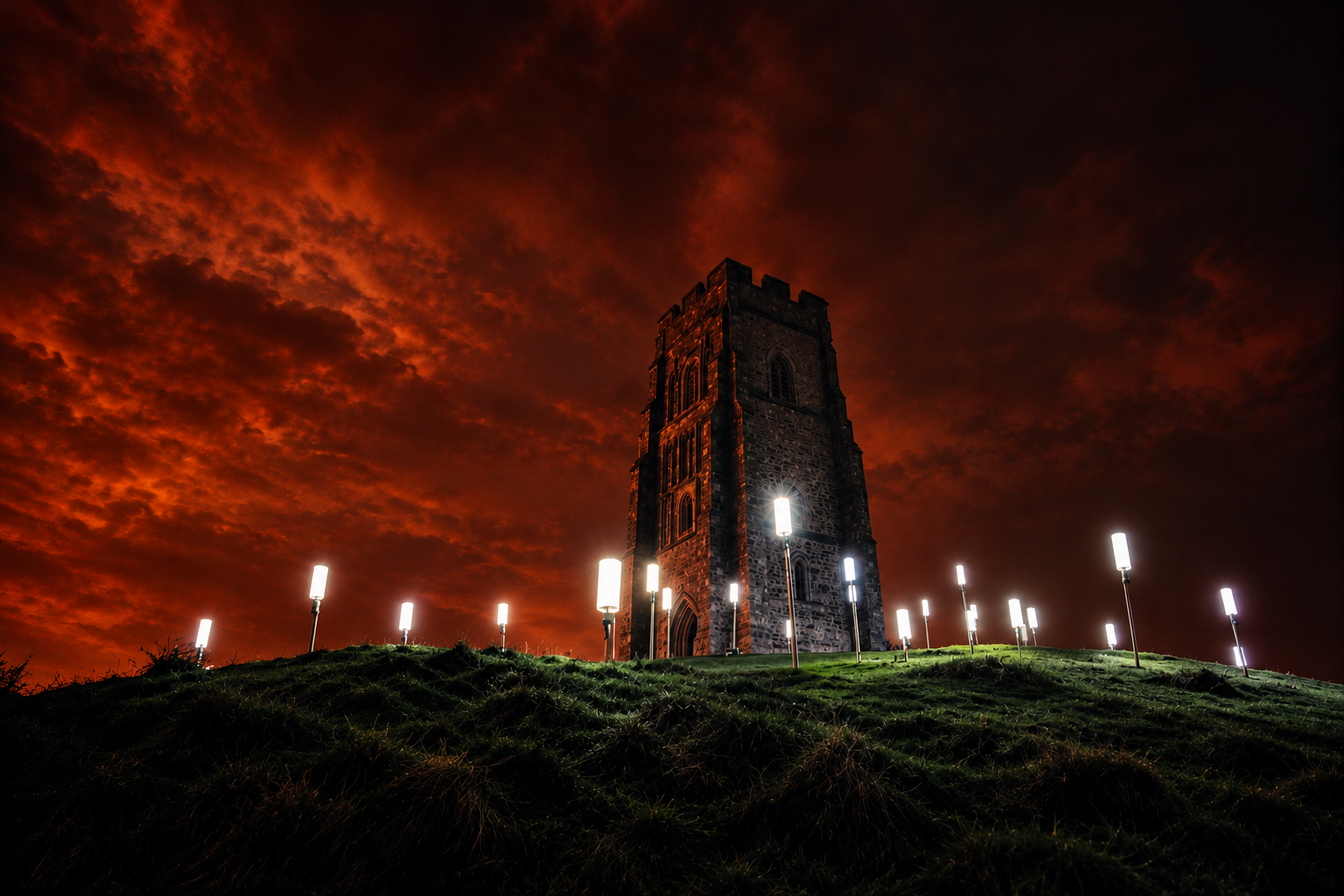
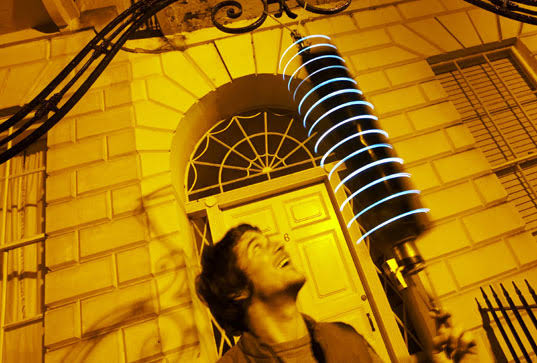
Then came Firewinder, a wind-powered light sculpture that transformed invisible movement in the air into visible light.
Firewinder won international design and sustainability awards and appeared in some extraordinary places, including Glastonbury Tor.
My investigation into planned obsolescence led me to ask a simple question: what would the opposite look like? One answer was Million Mile Light — a small running light powered entirely by the movement of the person wearing it, designed without a battery and conceived as a remedy to the disposable thinking I was seeing around me.
But something more important was happening to me.
I was becoming interested not only in what an invention did, but in what it made somebody feel.
I was beginning to make invisible things visible.
Looking differently
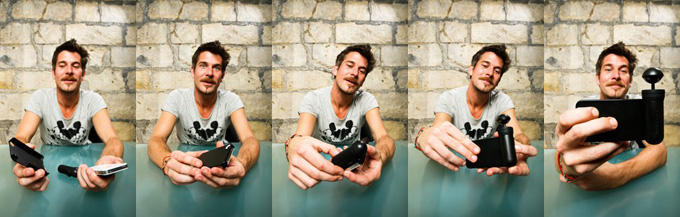
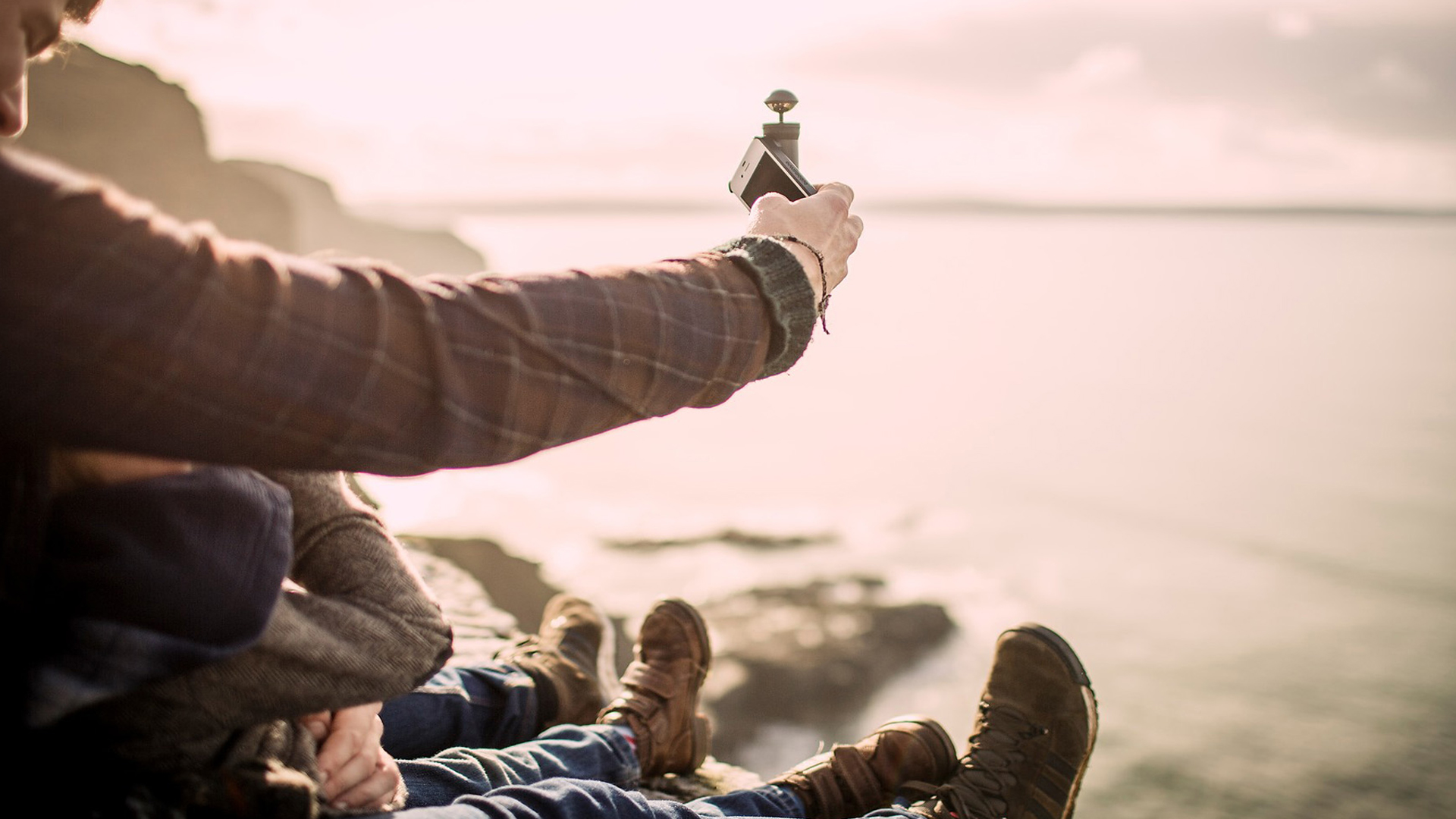
That curiosity eventually led to BubbleScope and BubblePix — early technology for capturing immersive 360-degree photographs.
This was before immersive photography became commonplace. I became fascinated by the possibility of looking not simply at something, but all around it.
BubbleScope received a Lovie Award for experimental innovation.
But again, the technology was only part of what interested me.
Invention taught me that the world is not fixed.
Every object around us was once an idea.
Every system was invented.
Every convention is something somebody decided to do in a particular way.
And if somebody imagined it one way, perhaps somebody else can imagine it differently.
That is an extraordinarily liberating thing to realise.
The usefulness of beauty
Eventually I began questioning what I meant by the word useful.
As a product designer, usefulness had seemed relatively straightforward. A product performed a function. You could measure whether it did its job.
Is stillness useful?
Is curiosity useful?
Is wonder useful?
A solar-powered kinetic sculpture I created called Uplift became a turning point.
It didn't wake you up in the morning or take a photograph.
Its usefulness was different.
It moved. It caught the light. It changed continuously.
And people stopped to look at it.
Uplift marked my movement from product design towards a more explicitly artistic practice and began an exploration of movement, nature, perception and wellbeing that continues today.
For perhaps the first time, I gave myself permission to make something whose principal function was simply:
That permission changed my life.
Wonder
Out of that exploration eventually came Wonder.
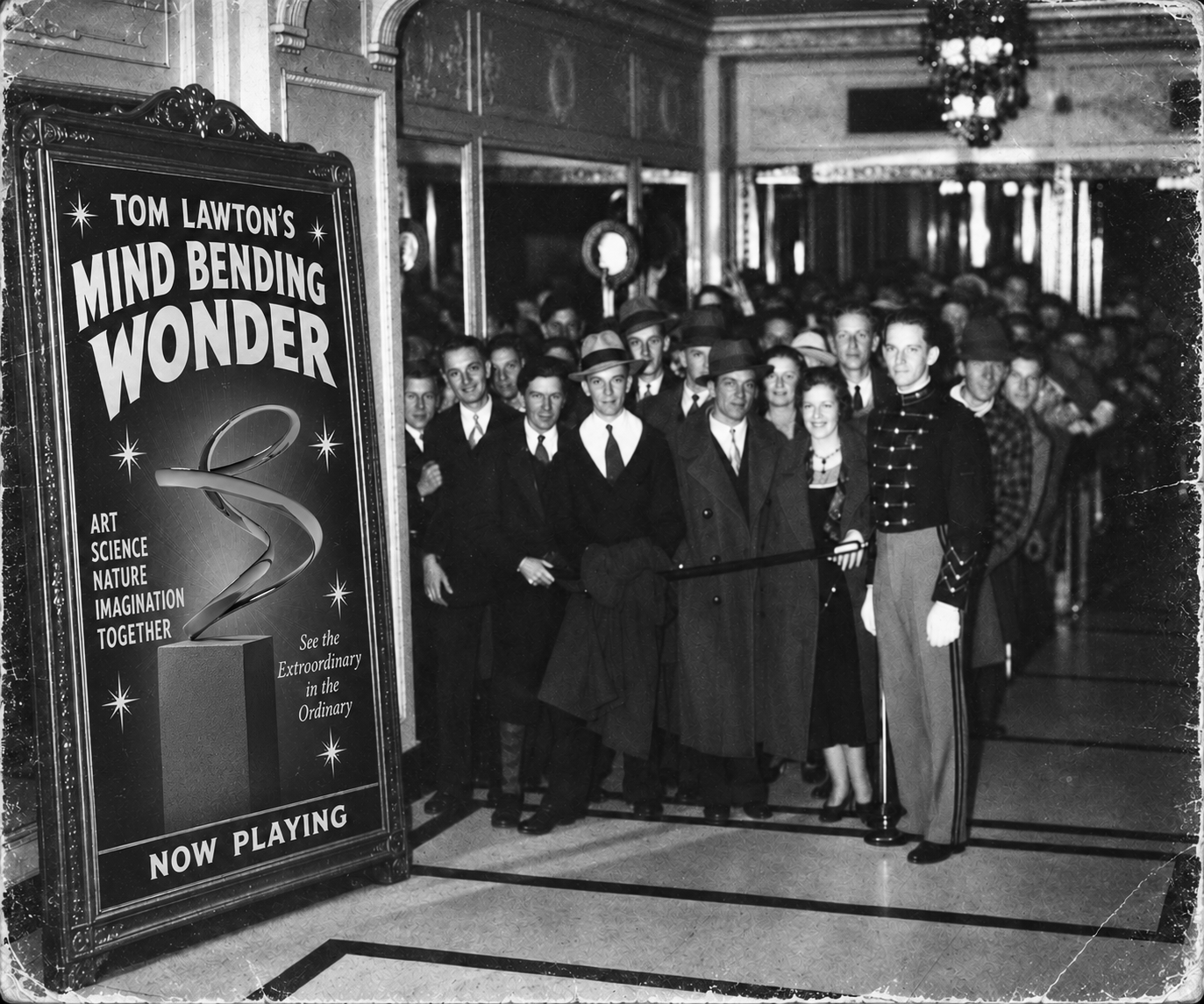
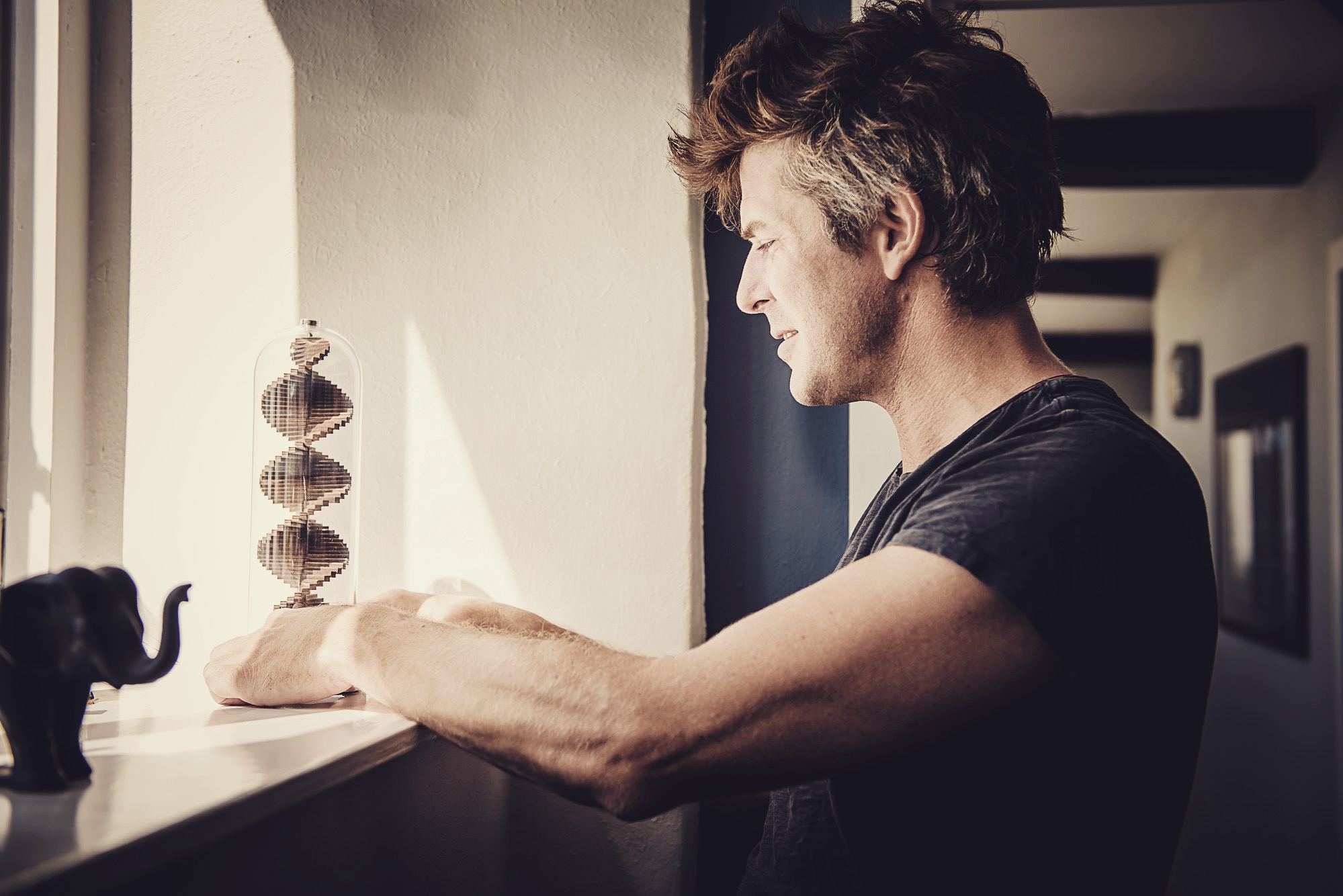
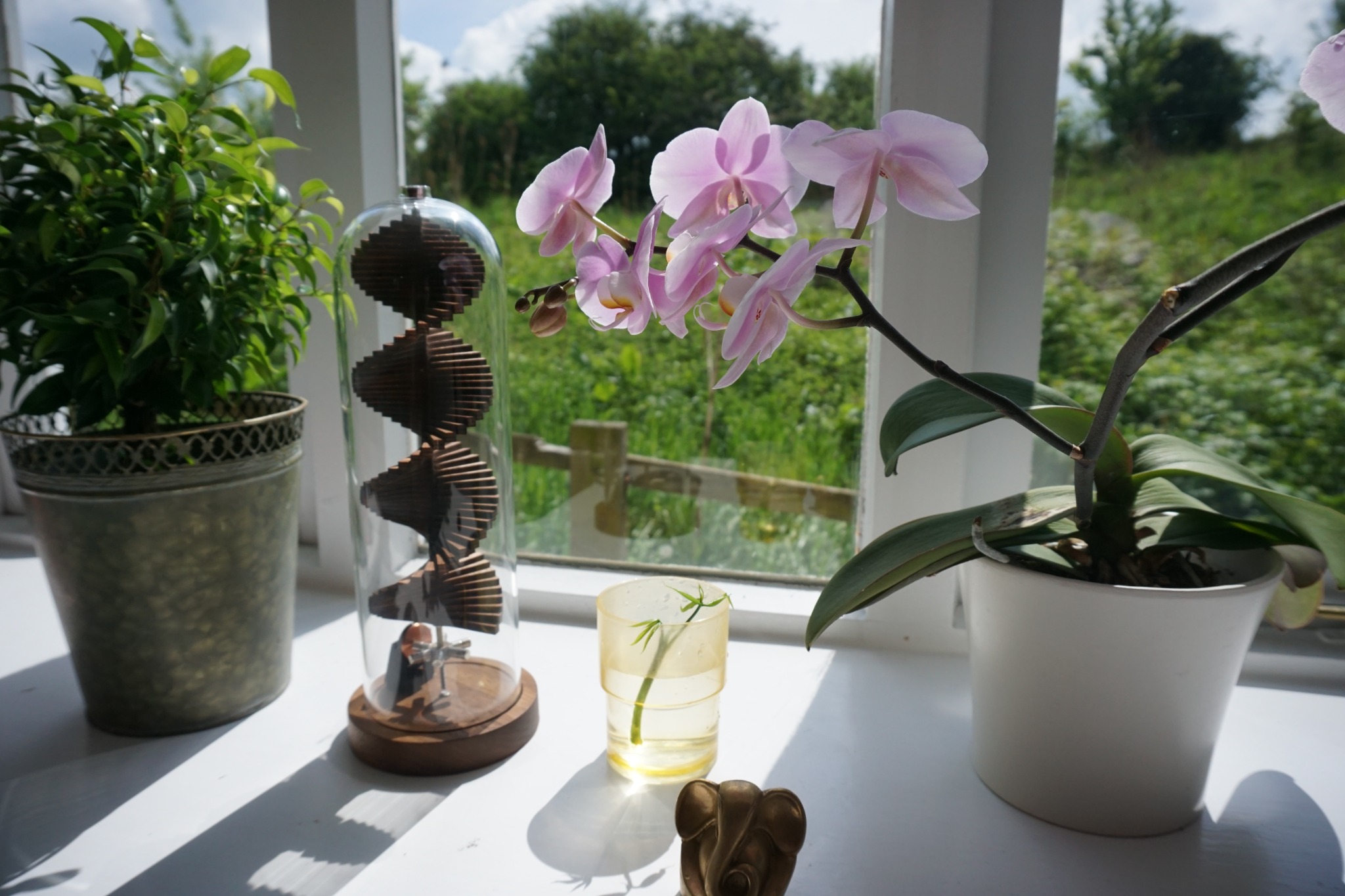
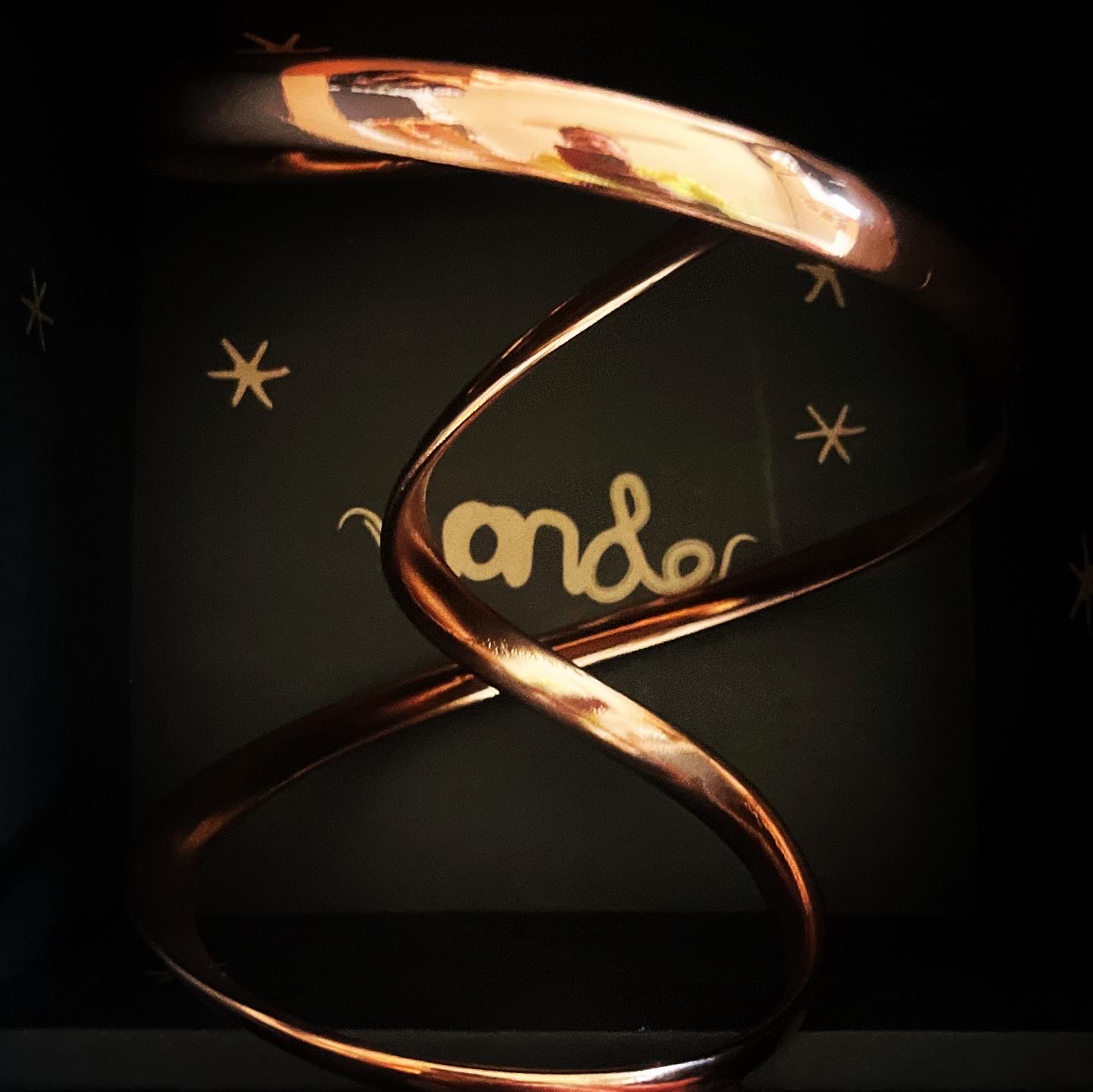
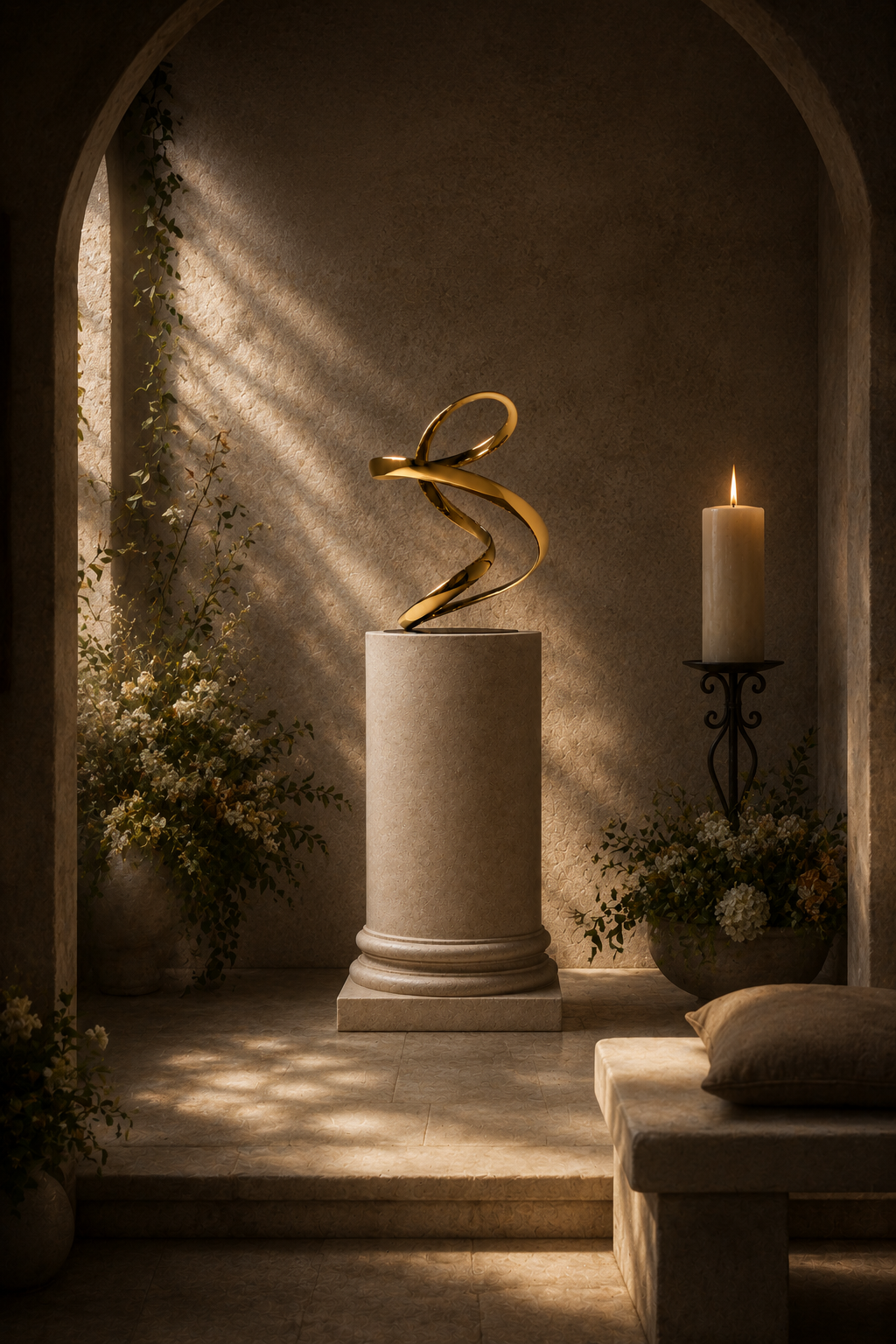
Wonder is a kinetic sculpture developed through years of experimentation with bi-helical geometry.
It moves continuously, yet somehow appears still.
I can explain its geometry. I can explain how it is engineered. I have patented aspects of the architecture behind it.
But none of those things adequately explains Wonder.
Because what interests me most happens in the person looking at it.
People stop.
Sometimes they smile.
Sometimes they become very quiet.
Sometimes they ask how it works.
Sometimes they don't want to know.
Wonder has found its way into historic, public and sacred places, including Avebury and Malmesbury Abbey, where a work is permanently installed. I also conceived and curated the Renaissance of Wonder at Malmesbury Abbey, bringing art, music and creativity into conversation with that extraordinary historic space.
Over time I came to understand that I wasn't really trying to make an impressive kinetic object.
I was trying to create a moment.
A moment of curiosity.
A moment of stillness.
A moment in which we might remember that being alive is actually rather extraordinary.
Visual harmonics
I have come to describe this part of my practice as visual harmonics.
Music offers us an obvious example of something intangible having a profound physical and emotional effect.
A sequence of vibrations moves through the air and somehow we experience joy, melancholy, tension, release, memory, transcendence.
I wonder whether visual experience can work in an analogous way.
Can movement encourage stillness?
Can complexity produce calm?
Can something engineered feel natural?
Can an artwork change not only what a space looks like, but how that space feels?
These questions have become increasingly important to me.
Because I don't think our surroundings are neutral.
The things we see, hear, touch and make affect us.
Beauty affects us. Nature affects us. Movement affects us.
And perhaps, if we approach these things thoughtfully, art can become part of how we care for ourselves and one another.
Creative spirit
This has inevitably led me towards questions of spirituality.
My own connection to spirituality is through what I call creative spirit.
I have close relationships with my Christian church, a Buddhist sangha, pagan communities and Taoist teachers. I am equally at home talking with scientists, engineers, artists, inventors and people who would describe themselves as having no spiritual belief whatsoever.
I don't see these worlds as mutually exclusive.
Quite the opposite.
I am fascinated by the territory they share.
Awe.
Nature.
Beauty.
Contemplation.
Mystery.
Connection.
And wonder.
I am particularly interested in how art can become a doorway to faith without prescribing what that faith should be.
A piece of music can move somebody before they understand why. A painting can express something for which we have no words. An ancient building can change the way we breathe when we enter it. A sculpture can make somebody stop. Making something ourselves can reveal something we didn't know was inside us.
That experience might be understood as Christian, Buddhist, pagan, Taoist, philosophical, psychological, scientific or simply human.
I don't feel a great need to decide which.
I am not interested in telling people what to believe.
I am interested in creating conditions in which they might feel, express, question, connect — and wonder.
It can provide the doorway.
Expression
There is another side to this which has become deeply important to me.
Expression.
My own life has not followed a neat upward trajectory.
I have experienced extraordinary highs and some very difficult lows. I have succeeded and failed. Built things and lost things. Loved. Been frightened. Made mistakes. Been misunderstood. Hurt people and been hurt. Fallen down and had to work out how to stand up again.
And for a period of my life, I was imprisoned.
At HMP Winchester, I became a caretaker in the multi-faith chapel and an art mentor.
It was an unlikely place to learn something important about freedom.
In an environment defined by restriction, I saw what could happen when somebody was given permission to express themselves.
Drawing. Painting. Writing. Making.
An idea could travel somewhere a body couldn't.
Art could communicate something somebody didn't yet know how to say.
I encouraged ambitious creative work and helped inspire an advanced art projects module. My own creative work there received two Koestler Awards.
The experience strengthened a belief that had probably been forming in me for years:
I am interested in expression as an antidote to isolation and despair.
Not because I think art magically cures depression or removes the difficulties of being human. It doesn't.
But because expression gives the interior world somewhere to go.
Making something can turn an invisible feeling into something visible.
It can begin a conversation. It can create connection. It can give somebody agency when much of life feels beyond their control.
Sometimes it can simply say:
This is what I feel.
This is what I see.
And sometimes that is a beginning.
Gentle Force
Curiously, the geometry that took me from invention towards art has now begun leading me back towards engineering and nature.
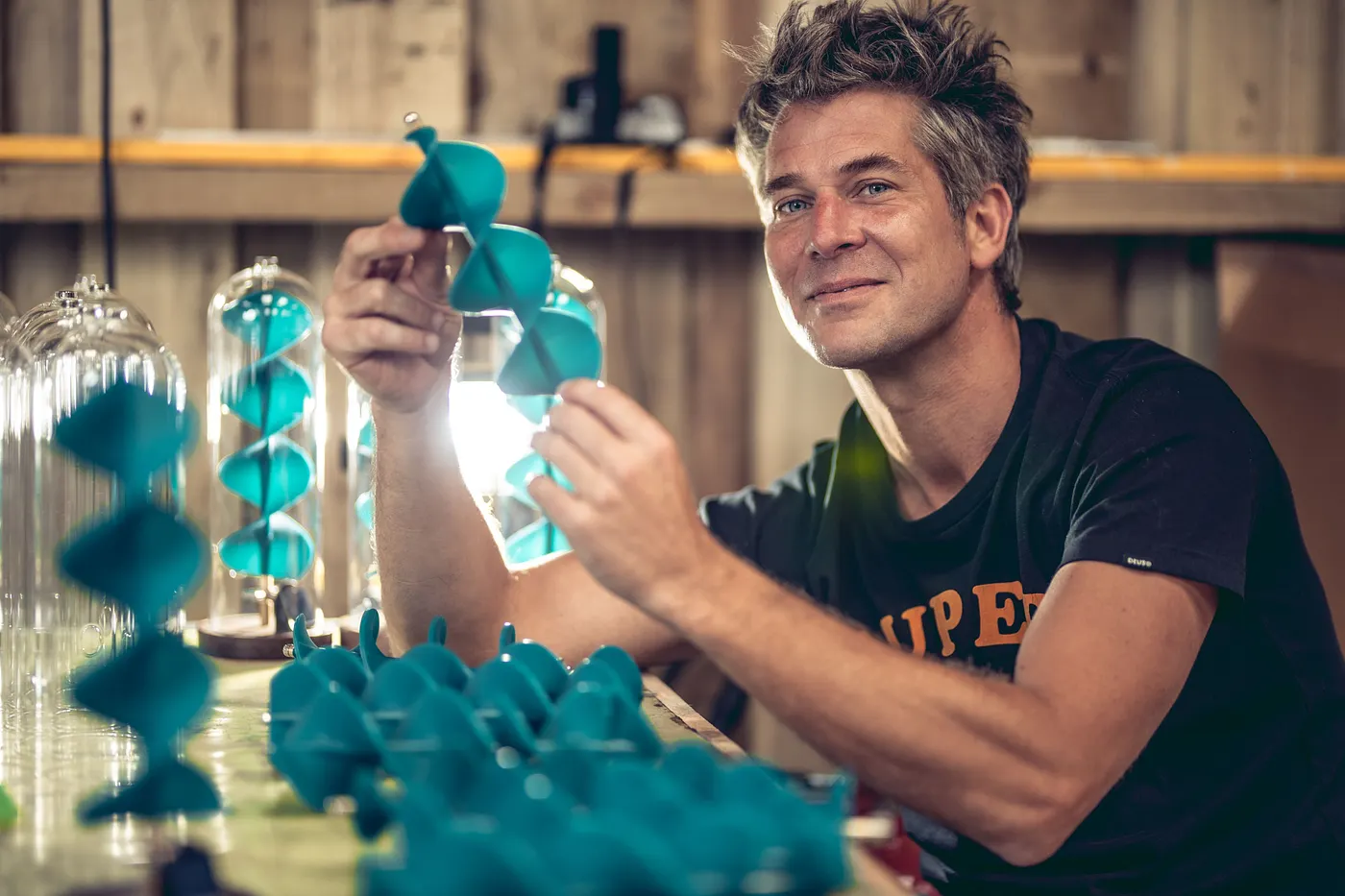
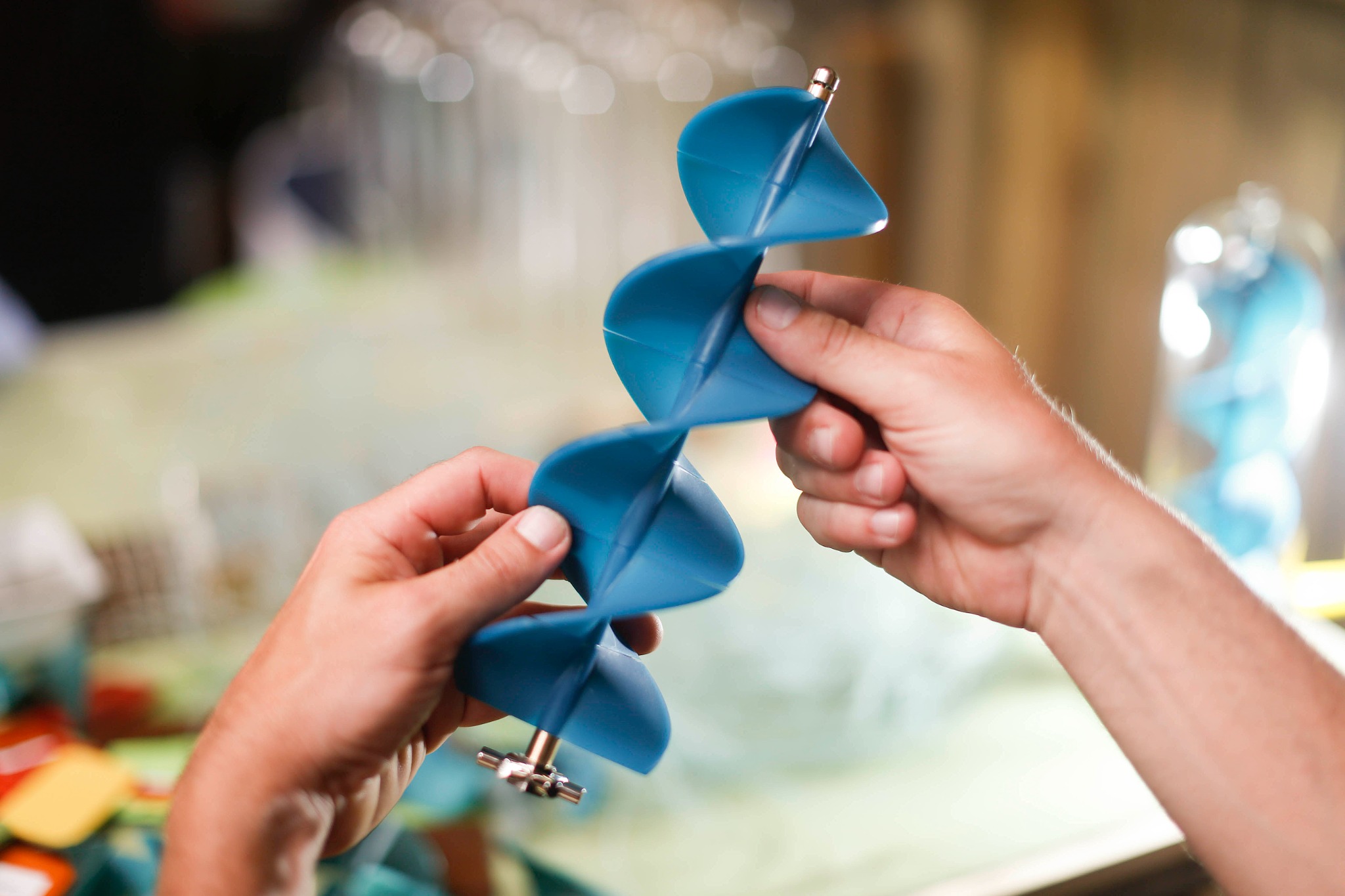
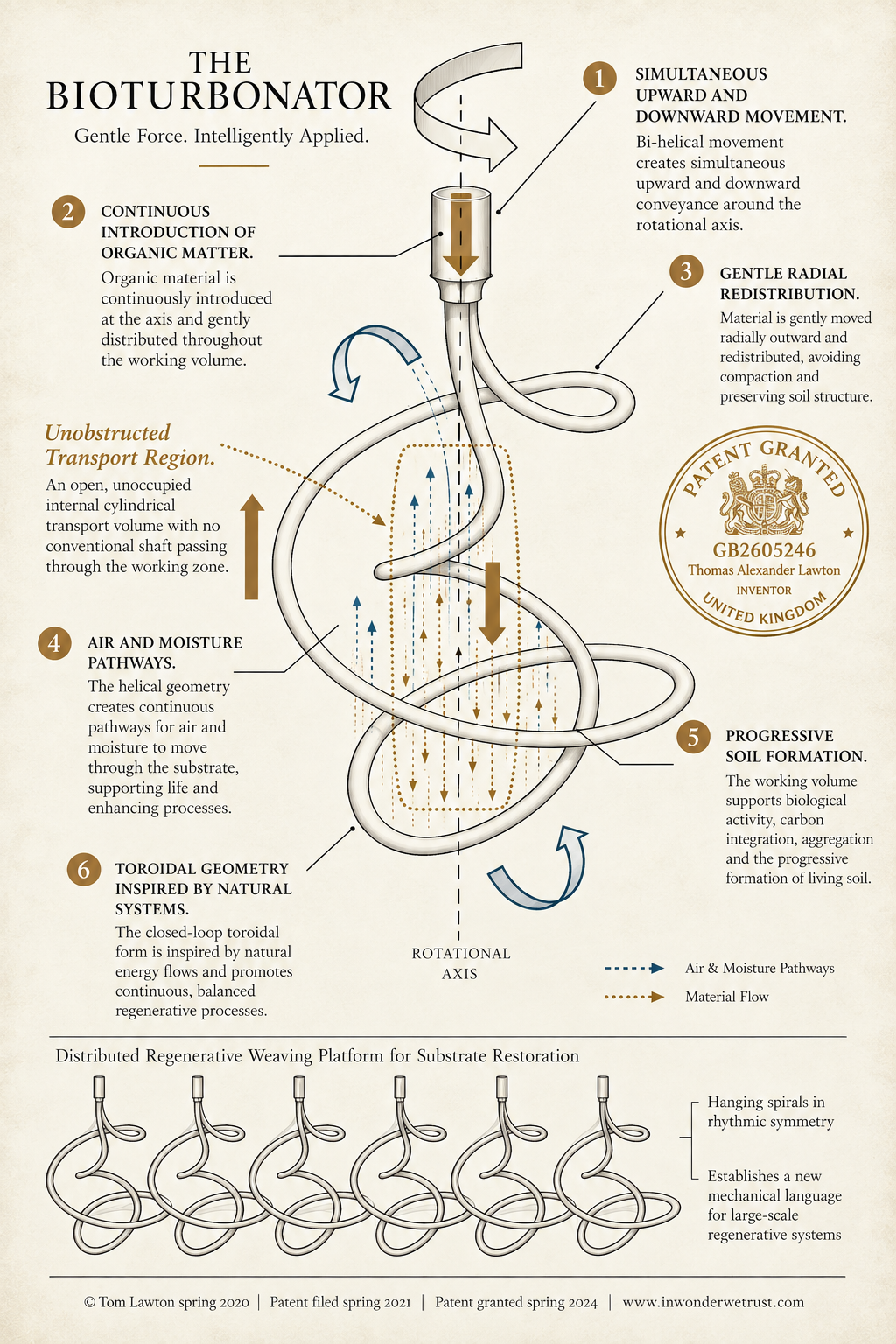
I am developing research around Bioturbonics — exploring biomimetic approaches to moving and combining organic material, including applications in the regeneration of degraded soils.
The work grows from the same bi-helical geometry that informed Wonder and is being explored with Dr Dan Evans at Cranfield University.
Behind it sits a wider philosophy I call Gentle Force.
Nature accomplishes extraordinary things without behaving very much like a machine.
Spirals.
Branches.
Flows.
Cycles.
Adapts.
It works through relationships rather than isolated components.
I have become interested in what engineering might become if, instead of continually trying to overpower natural systems, we became better at working with them.
But increasingly I wonder whether Gentle Force describes more than engineering.
Perhaps it describes something about creativity.
Perhaps even something about living.
Not everything has to be forced into existence.
Sometimes you create the conditions.
Pay attention.
Apply a little energy.
And allow something to emerge.
An Inventor's Tale
Eventually, all of this became a book.
An Inventor's Tale is my first memoir.
It follows more than twenty-five years of imagination through invention, entrepreneurship, family, ambition, success, failure, art and renewal.
I didn't set out to write a conventional success story.
Life cured me of that idea.
I wanted instead to write truthfully about what it feels like to follow an idea — including what happens when the path disappears beneath your feet.
Writing became another form of making.
Instead of plastic, metal, electronics or geometry, the material was memory.
A life in public
Along the way, I've been fortunate enough to have some extraordinary adventures.
My work has received international awards for design, sustainability and innovation. I am a Fellow of the Royal Society of Arts. My creative work has generated more than 100 million impressions online and has been covered by publications including The Guardian and The Telegraph.
Television has also been part of the journey.
I was the creator and subject of three hour-long primetime Channel 4 programmes intended to encourage people to use their imaginations, and I was the solo judge of CBBC's My Genius Idea, encouraging children to believe in their own creative thinking.
Long before either of those, I was a contestant on Lost in 2001, when being deposited somewhere unknown and trying to find your way home seemed like an unusually entertaining idea rather than an accidental metaphor for the rest of my life.
I've spoken at TEDx Bristol, the CUSP Conference in Chicago and other events, and taught and spoken with students, designers, inventors and audiences about creativity and imagination.
I'm grateful for those things.
But increasingly I don't think the interesting question is how many people saw something I made.
What now?
At fifty, I find myself beginning again.
Not from nothing.
From experience.
I continue to develop Wonder and explore how it might exist in public and contemplative spaces.
I am developing Gentle Force and Bioturbonics, following the curious possibility that the geometry of a sculpture might also teach us something useful about soil.
I take photographs of the world around me through Wonderhorse, a little visual diary made with a second-hand compact camera.
And I am following an invitation from Professor Mazin Qumsiyeh to bring Wonder to Bethlehem — a journey I have come to call The Bethlehem Quest.
I don't imagine that taking a sculpture somewhere can solve the problems of the world.
But I have become increasingly suspicious of the idea that because we cannot do everything, we should therefore do nothing.
A beautiful thing can still matter.
An invitation can still be accepted.
A stranger can become a friend.
A door can open.
In Wonder We Trust
After all these years, perhaps the thing I believe most strongly is that imagination belongs to everybody.
You do not have to call yourself an artist.
You do not need permission.
Creativity is not a professional qualification.
It is one of the ways human beings meet the unknown.
We imagine something that isn't there.
And then, occasionally, we make it real.
A business.
A garden.
A scientific theory.
A meal.
A sculpture.
A relationship.
A different life.
Hope itself requires an act of imagination, because to hope is to picture a reality that does not yet exist.
Perhaps that is why wonder matters to me.
Wonder interrupts certainty.
It makes room.
It reminds us that there is more here than we currently understand.
After a lifetime spent trying to invent things, I find myself increasingly interested in what we invent within ourselves.
A different perspective.
A reason to keep going.
A little faith.
A little courage.
A little wonder.
I don't know exactly where my own story goes next.
I no longer think I need to.